



When your antimalware service executable is taking all the CPU that the computer can get and it seems your fan is coming out of a jet engine, you have found the right location. This ” Antimalware Service Executable High CPU” is a typical Windows 10 and Windows 11 headache, and it does not necessarily indicate that your computer is infected and is on its deathbed. We should take a tour of what is literally happening and the realistic environments that you can make changes to to manage the situation.
Table of Contents
What Antimalware Service Executable Is
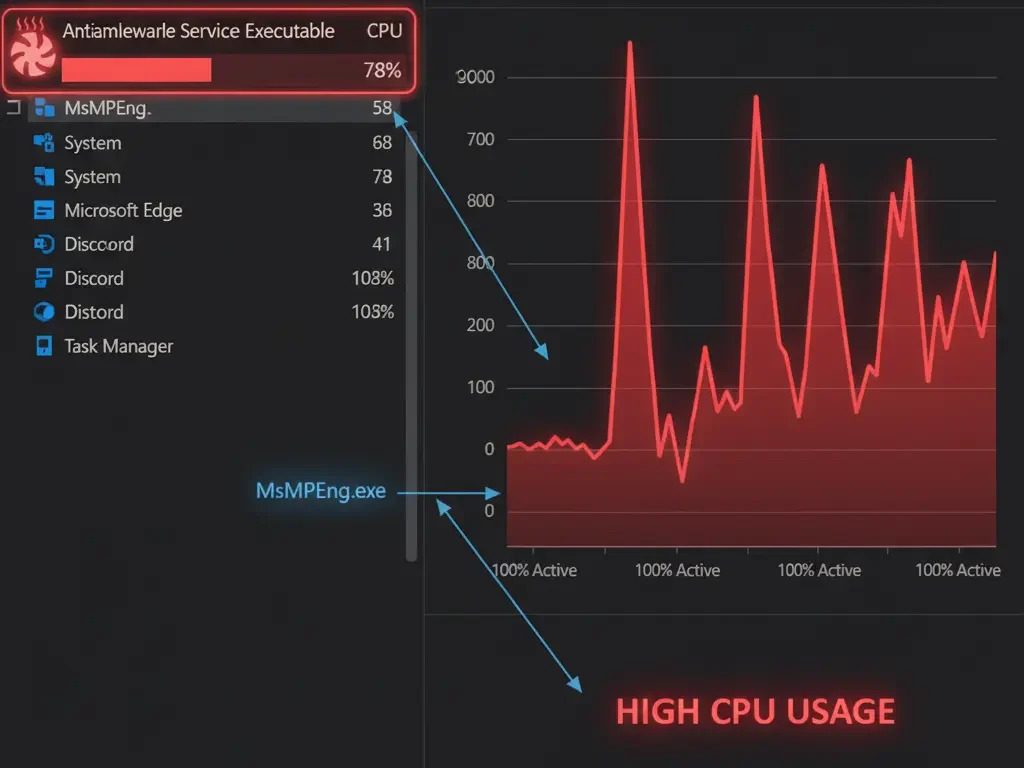
The background process of the Microsoft Defender (previously Windows Defender), which is the default antivirus of Windows 10 and 11, is Antimalware Service Executable. Its executable file is MsMpEng.exe and it is always on-going in order to offer real time protection.
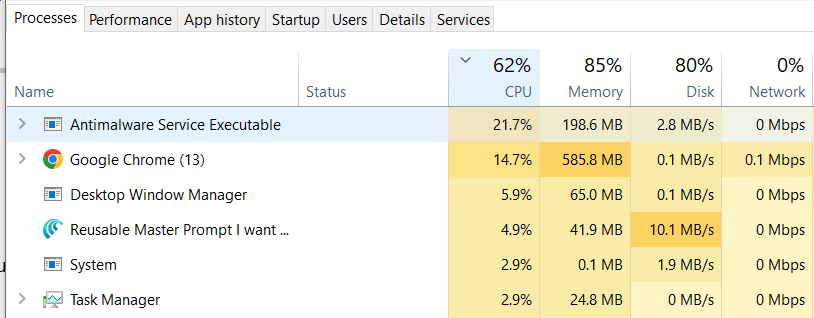
Most of the time when you notice antimalware service executable high CPU in Task Manager, then Defender is scanning files, checking the apps or it is scanning the files with the help of a scheduled scan in the background. This is normal up to a certain extent, however when it remains on high levels over a long period of time; then something requires to be adjusted.
Why Antimalware Service Executable High CPU Happens
High CPU doesn’t explain why antimalware service executable consumes much CPU. The straightforward explanation of how antimalware service executable high CPU occurs is that Defender is busy working hard in the background and at times it does not know when to relax.
Typical triggers include:
- Full or fast scans that operate when you are using the PC.
- Real-time protection that scans massive folders, backups, VMs or dev environments repeatedly.
- Defender rescan a large number of files simultaneously in definition updates or system updates.
- Antimalware service executable Malware or malfunctioning software which claims to be antimalware service executable or hammers the disk in a way that Defender continues to check it.
It is not to kill antimalware service executable though, but to prevent it resource hogging all the time.
Step-by-Step Fixes for Antimalware Service Executable High CPU
To tell the truth, you simply want your PC to feel fast once again. Install these antimalware service executable high CPU fixes in the upper order until the situation subside.
1. Allow Scan of Current to Complete (Then Reboot)
Assuming that high usage began randomly, and you notice a scan in progress in Windows Security, allow it to happen as much as you can. Complete scan may require some time, however, after the scan, antimalware service executable high CPU tends to revert to normalcy.
Once the scan is complete, restart your PC to get rid of any pending tasks or updates.
2. Change Defender Scan Schedule
When antimalware service executable high CPU is a consistent occurrence when you are working then it might be it has scheduled scans during the day. You can even make them re-scheduled to a time when you are not on the PC.
Typical tweak:
- Open task scheduler in it, select defender scan tasks and adjust them to run at the night time or during off hours rather than any time the PC is idle.
- Turn off run with highest privilege and strict idle state, so that scans do not self-kick-in so rudely when you are busy.
This does not compromise the security, it only makes Defender a less annoying program.
3. Add Exclusions on Heavy Folders
When using large codebases, game libraries, virtual machines, or backup folders, the antimalware service can be heavy CPU usage triggered since Defender continues to scan them.
Through windows security virus and threat protection manage settings exclusions, you can:
- Add special folders (such as VM folders, development environment, giant archives).
- Include executables or processes that you can trust.
This minimizes the frequency with which antimalware service executable strikes those fat targets and can significantly reduce the CPU and disk consumption.
4. Examine Actual Malware or Fake Imposters
The embarrassing thing is that occasionally antimalware service executable high CPU is a side effect of real malware or a rogue process with a similar name.
To rule this out:
- Conduct a complete Microsoft Defender scan on Windows Security.
- Optional: Have a third-party on-demand scanner (do not use two real-time antiviruses concurrently) run another scan.
In case Defender detects and eliminates threats, CPU might reduce to normal levels later.
5. Update Windows and Defender
Obsolete engines or problematic updates may result in antimalware service executable high CPU remaining longer than it ought to.
- Install latest cumulative updates using windows update.
- Check the updated virus and threat protection definitions in Windows Security.
Microsoft frequently releases patches to address Defender performance problems as part of regular updates and as such, regular updates do in fact speed up.
6. Smart CPU Limits or Affinity (Advanced)
On other systems, you may put a limit on the amount of CPU antimalware service can utilize to ensure it does not spike your system on scans.
Two common approaches:
- Limit speed of CPU usage by Defender scans using Group Policy or other pertinent policies in Pro/Enterprise.
- Affinity MsMpEng.exe to set processor affinity so that it does not utilize all the cores simultaneously trade some scan speed with smoother performance.
This is more sophisticated, however, handy based on regular observations of antimalware service executable high CPU with a weaker CPU, yet still requiring scans.
7. Take into Account Third Party AV (Last Resort)
When antimalware service executable high CPU just will not hush down despite exclusions, scheduling, and updates, you can change to a reliable third party antivirus that automatically deactivates real-time protection of the Defender.
It is highly undesirable to disable Defender or antimalware service executable in totality and leave your system without any alternative. In that case, do install a decent alternative.
Quick Checklist: Antimalware Service Executable High CPU
Here is your run through checklist that you can use when antimalware service executable high CPU runs out of control:
- See whether a scan is going; let it complete, then restart.
- Task Scheduler Move hourly scans to nighttime or idle.
- Include an exemption of large or used folders and trusted applications.
- Install a complete malware scan to exclude infections or fake processes.
- Install Windows updated and Defender.
- Optionally limit the CPU usage of Defender or alter affinity setting in case you are familiar with advanced options.
- Nothing works, so only in this case, change to a reputable third-party antivirus, rather than completely switch off the protection.
Also Read : Modern Warfare 3 Custom Loadouts Not Working: Causes and Solutions
FAQs about Antimalware Service Executable High CPU
1. Is antimalware service executable a virus?
No, antimalware service executable (MsMpEng.exe) is a core Microsoft Defender process and is part of Windows itself. If it’s in the correct system folder and signed by Microsoft, it’s legitimate.
2. Is it safe to end antimalware service executable in Task Manager?
You can end the process, but it’s only a temporary band‑aid; Windows will usually restart it automatically, and your protection may be reduced in the meantime. It’s better to fix why antimalware service executable high CPU is happening than keep killing the process.
3. How much CPU is “normal” for antimalware service executable?
Short spikes during scans or app installs are normal, especially during full scans or updates. Constantly sitting at high percentages (like 40–80%) for long periods while you’re idle is a sign you should tune scheduling, exclusions, or check for issues.
4. Will adding exclusions make my PC unsafe?
Smart exclusions for known safe folders (like your own dev or VM folders) are generally fine and can significantly reduce antimalware service executable high CPU. Just don’t exclude random system folders or downloads where malware is likely to appear.
5. Does installing another antivirus automatically stop antimalware service executable?
Most reputable third‑party antivirus tools disable Microsoft Defender’s real‑time protection when installed, which reduces or removes antimalware service executable high CPU. Still, verify in Windows Security that Defender is no longer actively scanning in real time